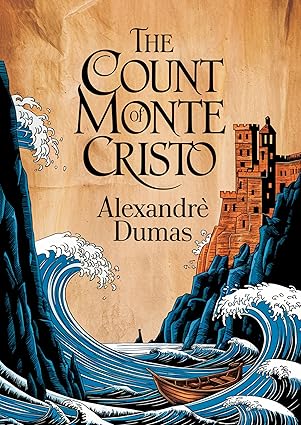
The Count of Monte Cristo
by Alexandre Dumas
Post Author: Pepper Scott
Few novels reward rereading the way The Count of Monte Cristo does.
On the surface, Alexandre Dumas gives readers everything a great story should have: betrayal, wrongful imprisonment, hidden treasure, revenge, disguise, and one of literature’s most unforgettable protagonists. Edmond Dantès begins as a young man with a promising future before his life is destroyed by jealousy and betrayal. His transformation into the Count of Monte Cristo is one of the most compelling character arcs in literature.
But this novel grows richer with age.
When I first encountered this story years ago, I was captivated by the intelligence of the Count and the elaborate precision of his revenge. Like many readers, I admired his patience and brilliance.
Returning to it later in life, I experienced it differently.
Now the novel feels less like a thrilling revenge fantasy and more like a meditation on suffering, justice, and what remains of a person after profound loss. Dumas asks difficult questions: Can revenge restore what was taken from us? Can justice delivered by our own hands ever be enough? What happens when a person becomes consumed by the very pain they are trying to answer?
This reread was also deeply personal for me.
My beloved Terry and I loved this novel, and we also shared a long affection for The Shawshank Redemption. We watched that film so many times we practically knew it by heart, sometimes revisiting favorite scenes the way some people revisit songs. After watching the movie together countless times, we decided to reread The Count of Monte Cristo, recognizing how much the two stories echo one another through imprisonment, endurance, hope, and eventual liberation.
That rereading became one of those ordinary moments that later turns sacred.
Growing up before the internet, public libraries were our portals to the world. Books like this circulated endlessly among friends until they came back worn and softened by many hands. These classics did not simply sit on shelves. They lived in communities.
Reading this book again now is not easy. It carries memory as much as story. But perhaps that is part of why it matters so much. Great books become attached to the chapters of our own lives.
The Count of Monte Cristo remains a masterpiece not only because of its plot, but because it understands something essential about being human: suffering may transform us, but it does not have to define our ending.
Highly recommended for lovers of classics, historical fiction, intricate plotting, and stories of endurance, justice, and hope.
Read my personal reflection: Dumb-ass
Non-affiliate link: The Count of Monte Cristo