Terry's Quiet Miracle
Pepper Scott
The house grew quieter in those months when outings gradually shortened, though not in a lonely way. More like a library in the afternoon. Sunlight marking time across the floor. A kettle thinking about boiling. My kind of tempo.
For Terry, this was a new country.
He had always belonged to noise. To handshakes and backslaps and conversations that overlapped like enthusiastic choirs. A man who could make a grocery line feel like a reunion. Staying home was, for him, an advanced level of patience. Yet he took it on with curiosity, as if it were a hobby that required practice.
He talked to the television as if the people inside might answer back. He rewrote punchlines to improve them. He kept us entertained with a running commentary on absolutely everything, including the heroic efforts of the toaster.
So when I began filling the house with small pots of soil, it felt like a natural extension of our new, slower orbit.
I did not expect the seedlings to become his audience.
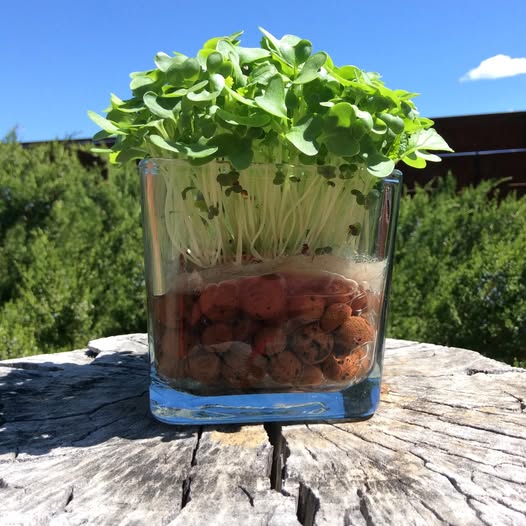
“Look at that,” he said the first time I showed him the little glass pot. His voice dropped to a near whisper, the way people speak in cathedrals. “They’re working.”
Working. As if the seeds had tiny briefcases and a schedule to keep.
Terry knew the scale of farming. The grit, the weather, the long arithmetic of hope and loss. He respected it in the way one respects mountains. From a distance, with awe. He had grown beautiful houseplants over the years, all glossy leaves and dependable green. But food, actual food, rising from something the size of a comma, stopped him in his tracks.
Every morning he checked on them.
Status reports were delivered with great seriousness.
“More leaves today. They’re confident.”
He leaned close, studying the pale threads of roots as if they were lines of poetry. And then came the philosophy. Not heavy. Never heavy. Terry did not believe in heavy when wonder was available.
“Imagine,” he said, “all that instruction packed into a speck. We should be nicer to specks.”
Shall we measure our days by growth instead of clocks?
It became our shared ritual. Coffee for us. Sunlight for them. A quiet committee meeting at the edge of the kitchen table. We admired their determination. They admired nothing at all, being very focused on becoming lunch.
And there was Terry, the man of crowds, completely absorbed by a square of glass and a handful of green ambition.
It was beautiful to watch him watch them.
Life, he decided, was less about the big harvest and more about the daily unfurling. The small proofs. The steady reach toward light.
I agreed. Of course I did.
In the late afternoon, when the room turned the color of honey, he would nod toward the seedlings and say, “We’re doing the same thing, you know.”
Growing quietly.
Working.