Sound Advice
Pepper Scott
“Never eat anything bigger than your head.”
The sentence landed in the middle of an ordinary conversation about food, tossed out casually like a paper airplane. No ceremony. No explanation. Just there.
A few people laughed.
It is, objectively, ridiculous advice.
Also, surprisingly practical.
I pictured someone standing in front of a watermelon, pausing to do a quick measurement against their skull before making a life decision. There is something deeply comforting about rules that are both absurd and oddly reasonable.
But for me, that sentence was not just a joke floating through the room.
It was a key.
And suddenly, a small locked door in my memory swung wide open.
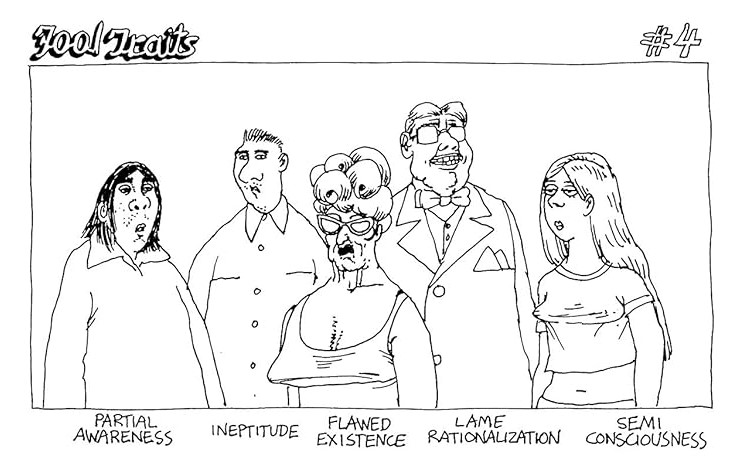
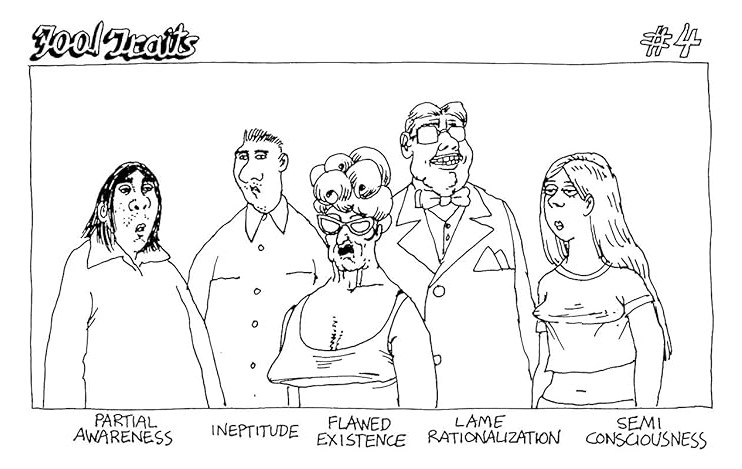
If you are of a certain vintage, you may recognize it immediately as the title of a book, Never Eat Anything Bigger Than Your Head. Not a serious manifesto on portion control, as one might hope, but a wonderfully strange collection of cartoons and nonsense.
The kind of book that should not be as memorable as it is.
And yet.
Some books arrive in your life like professors. Wise, important, life-altering.
Others show up wearing mismatched socks and carrying a rubber chicken.
This was definitely the second kind.
It reminded me of Terry.
Terry did not smile often. At least not in the conventional sense. He was not one of those sunny people who wandered around handing out cheerful expressions like candy at a parade.
But laughter?
That was another story entirely.
He laughed with commitment.
With his whole body, as if laughter was not a reaction but a temporary loss of structural integrity. Shoulders shaking. Eyes watering. That kind of laugh that makes everyone else want to laugh too, even if they have no idea what the joke is.
Especially then.
His humor was delightfully crooked. Slightly sideways. Occasionally inappropriate in ways that made you look around first before deciding whether it was safe to laugh.
Naturally, I was intrigued.
One day, after hearing him dissolve into one of those spectacular fits of laughter, I finally asked what on earth was so funny.
He handed me the book.
That was it.
No speech. No buildup. Just a quiet offering, like he was passing along a family heirloom or a slightly unstable artifact.
We flipped through it together.
And then again.
And again.
Somehow, this odd little cartoon book became the center of several days of uncontrollable laughter. Not elegant laughter either. Not refined literary chuckling.
Real laughter.
The messy kind.
The kind that sneaks up on you hours later while washing dishes.
That book is probably not listed on many “must-read before you die” lists.
No one is likely writing dissertations about its emotional depth.
And still, it matters.
Deeply.
Not because it changed my worldview or taught me how to live with greater wisdom. It offered no spiritual revelations. No profound conclusions.
Its only mission was delight.
Which, frankly, is an underrated contribution.
Books are funny that way.
Sometimes they become less about what is printed on the pages and more about what they quietly collect along the way. A season. A room. A person. A particular kind of happiness.
Like leaves pressed between chapters.
You open them years later, and there it all is.
Waiting.
A laugh.
A voice.
A moment suspended like dust in afternoon light.
So yes, “Never eat anything bigger than your head” is silly advice.
Questionable, even.
But I am strangely grateful for it.
A sentence this ridiculous should not carry this much warmth.
And yet, here we are.
Proof that humor does not always need to be clever or universal or even particularly sensible.
Sometimes it just needs to be wonderfully, gloriously odd.
A little like love.
And very much like Terry.