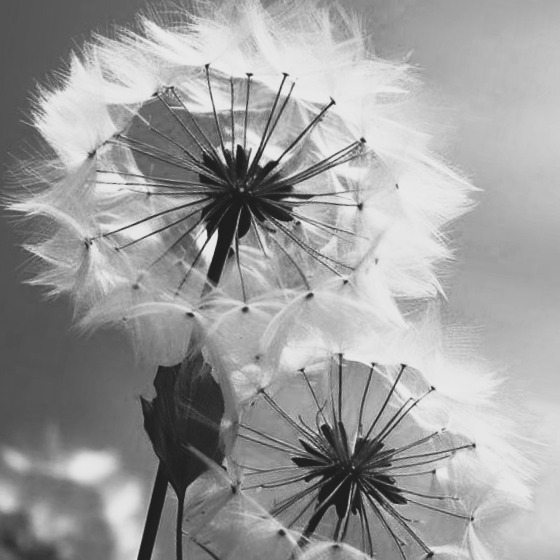
Dandelions
Pepper Scott
Dandelions may have a bad reputation, or at the very least, are misunderstood.
Some think dandelions are the freeloaders of the plant world. The ones who show up uninvited to backyard parties, set up a lawn chair in the middle of meticulously planned flower beds, and act like they were on the guest list all along. No apology. No explanation. Just there.
In spring, dandelions are at their showiest, their bright yellow faces spreading a joyful, wild spirit, as if they truly reflect the lively shine of the sun. When the time comes, they make seeds. The flowers transform into soft spheres of silk-like threads, each one loosely connected to a slender seed, each one capable of expanding life with nothing more than a light breeze.
I did not know the plant well. I only knew they were stubborn. And somehow always present.
Then one day, I actually looked at one.
The one carrying “future lives.”
Really looked.
Up close, the flower is not a weed at all. It is a small universe. Soft white filaments gather into a floating sphere, each thread attached to a fragile seed, each one carrying a quiet intention. When the wind comes, they let go. One by one. No rush. No panic. Just trust.
It is hard not to pause when that happens.
Hard not to smile.
I learned later that dandelions are not freeloaders. They are generous hosts. Their flowers feed bees. Their leaves feed and heal people. Their roots tend the soil quietly, doing the kind of work that rarely earns applause. Useful. Humble. Persistent. A very solid résumé for a plant that gets kicked out of most gardens.
It reminds me of Terry.
Not in a heavy way. Not in a look-back-and-sigh kind of way. More in the casual, everyday way. The way you suddenly notice that the good someone brought into the world keeps showing up—in stories, in habits people picked up from him, in small, bright moments that drift into conversations long after he has left the room.
Wild.
Useful.
Contagious.
That was Terry’s particular flavor of presence. He did not force his way into spaces. He simply appeared, did some good, and left things a little lighter than he found them. If you were paying attention, you felt it. If you were not, the effect still landed.
Dandelions do that too. They scatter themselves into places that were not expecting them. They grow anyway. They bloom anyway. They offer what they have, and then they let go.
Shall we learn from that?
From the quiet confidence of a plant that knows when to hold on and when to float free?
I think so.
So now, when I see dandelions rising up through sidewalk cracks or leaning into a breeze, I nod at them like old friends. Thank you for showing up, I think. Thank you for being exactly what you are.