A Fart on a Curtain Rod
Pepper Scott
Some friendships arrive the way spring does in the mountains. Quietly at first, almost unnoticed, and then one day you realize the whole landscape has changed.
That was Terry and Herman.
Now, if you had asked Herman and Tinca at the beginning, they probably would have told you they had no intention of adopting a fast-talking radio man into their daily orbit. But life has its own sense of humor, and apparently, so does destiny.
Or perhaps reincarnation.
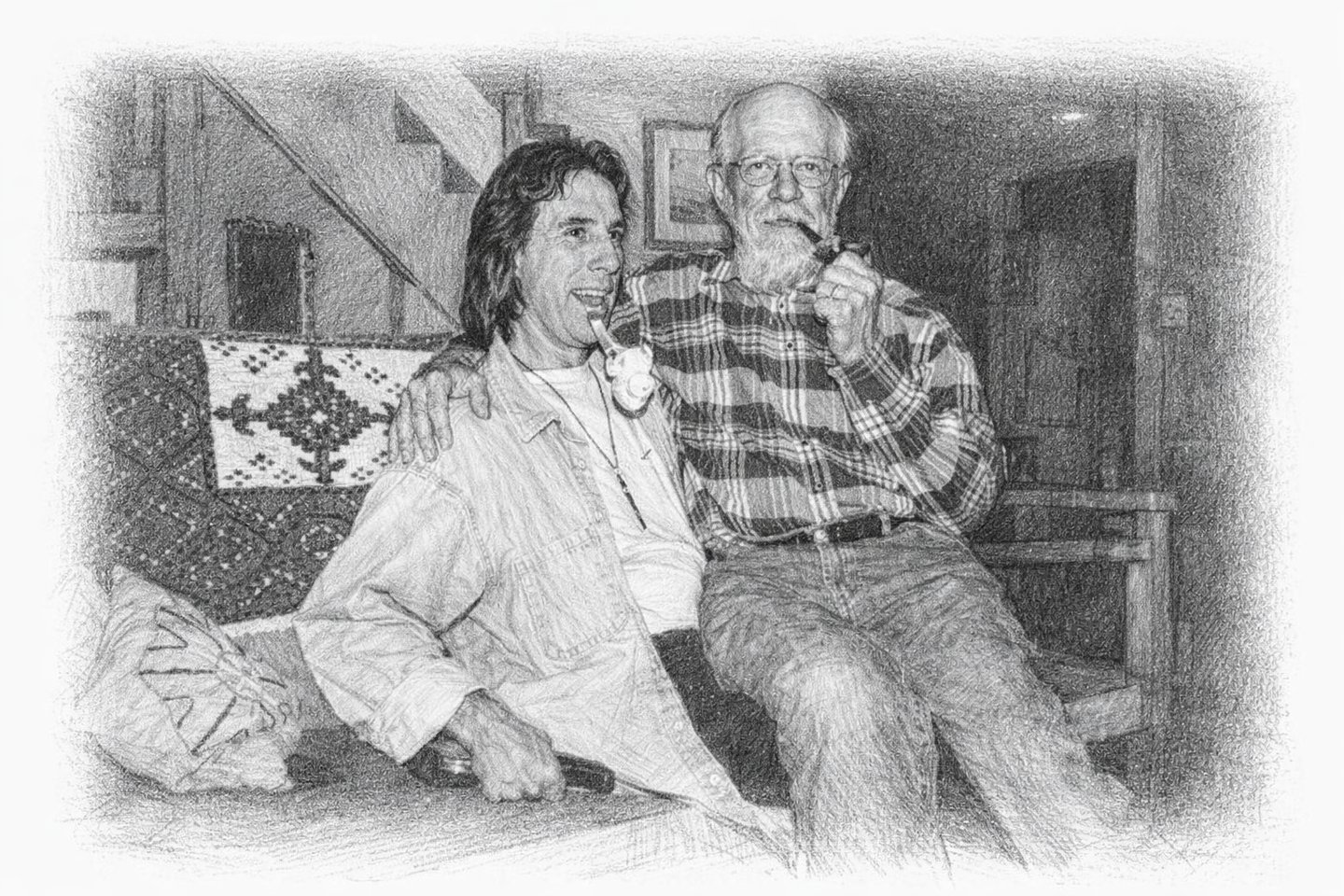
Terry always carried this curious belief that he had died fighting in World War II in a past life. Not exactly the sort of thing people casually mention over appetizers, but somehow, with Herman, it made perfect sense. Herman had actually lived the history Terry felt strangely tethered to. Not from books or documentaries, but from muddy roads, hidden rooms, close calls, and the kind of courage most of us can only imagine from a safe distance.
Maybe that was the thread.
An invisible one, but strong.
After that first dinner with Herman and Tinca, whatever polite boundaries the Bodsons had planned quietly dissolved like sugar in warm tea. A friendship began to grow, not dramatically, but steadily, like ivy finding its way up a stone wall.
And then there was Maxie.
Terry’s baby Rottweiler had apparently secured his own fan club. Tinca once told me her heart always felt warm whenever Terry walked past their home with little Maxie trotting beside him. I can picture it so clearly. A simple neighborhood scene made sacred by affection.
At that time, Terry lived alone. He spent his days, and most nights, working as a local radio anchor. His life was built around microphones, headlines, deadlines, and whatever caffeine-fueled momentum keeps radio people functioning. Outside of work, the Bodsons were really his people.
And what people they were.
Herman loved to talk about World War II, naturally. Terry, being Terry, loved to talk about absolutely everything else.
And wow, could Terry talk.
Not just talk.
Accelerate.
Words came out of him like they were trying to catch a departing train.
One day, after Terry had enthusiastically unloaded yet another rapid-fire story, Herman leaned back and declared, “C’est comme un pet sur une toile cirée.”
Terry blinked.
Tinca kindly translated: “You talk like a fart on a curtain rod.”
To this day, I am still not entirely sure what that means.
Neither was Terry.
But somehow, it was hilarious anyway.
That moment floated back to me while reflecting on Herman’s second book, Downed Allied Airmen and Evasion of Capture. Reading his words is one thing. Knowing the man behind them is something else entirely. It is like being handed both the map and the compass.
When it was finally time for Herman to leave this earthly chapter, he squeezed Terry’s hand and offered one final line worthy of framing.
“Terry, I am proof that life is too short.”
He was 90 years old.
Only Herman could make ninety sound like a coffee break.
And maybe that was his gift.
He understood time the way survivors do. Not as something to count, but something to spend well.
On friendship.
On laughter.
On long conversations, even the ones that sounded like airborne bodily functions.
Not a bad way to live, honestly.